Punts, Pixels, and Payouts: Britain's Betting Buzz in 2024
UK Gambling Hits £4.3 Billion Milestone in Q2 FY 2025/26 as Remote Sector Drives 6.6% Growth

The Latest Snapshot from the Gambling Commission
Figures from the UK Gambling Commission's quarterly industry statistics for July to September 2025, known as Q2 of the financial year 2025/26, paint a clear picture of steady expansion in the customer-facing gambling sector, where total Gross Gambling Yield (GGY) climbed to £4.3 billion, reflecting a solid 6.6% rise compared to the same quarter in 2024; this growth, observers note, stems largely from the remote gambling arena, which continues to outpace traditional land-based operations even as debates around regulation heat up in early 2026.
GGY, that key metric capturing the net win for operators after payouts, serves as the go-to barometer for industry health, and these numbers dropped right as February 2026 wrapped up, giving stakeholders fresh data amid ongoing talks in Parliament about duties and market shifts. Data reveals how online platforms pulled ahead, while physical venues held their ground with impressive machine counts and shop networks.
What's interesting here is the balance; remote activities surged, yet land-based betting shops and casinos kept contributing meaningfully, underscoring a hybrid landscape where digital convenience meets brick-and-mortar familiarity.
Remote Sector Takes the Lead with £1.4 Billion in Casino GGY
Remote casino GGY hit £1.4 billion during this period, marking one of the standout performers as players increasingly turn to apps and sites for slots, blackjack, and roulette from their phones or laptops; experts tracking these trends point out that this segment alone fueled much of the overall uplift, benefiting from broader internet access and mobile tech advancements that make betting seamless anytime, anywhere.
And while exact breakdowns for other remote categories like bingo or poker aren't spotlighted in the headline figures, the collective remote push signals confidence among operators who've invested heavily in digital infrastructure. Turns out, this remote dominance isn't new, but the 6.6% total growth rate shows acceleration, especially when juxtaposed against flatter land-based returns in some areas.
People in the industry often highlight how regulatory tweaks, like affordability checks rolled out earlier, haven't dampened enthusiasm; instead, licensed platforms thrived, pulling in yields that reflect both higher participation and smarter operator strategies.
Land-Based Betting Holds Steady at £592 Million Non-Remote GGY
Non-remote betting, the heartbeat of high streets up and down the country, generated £592 million in GGY, a figure that speaks to the enduring appeal of stepping into a buzzing betting shop on match day or race afternoon; with 5,782 such premises licensed across the UK, these spots remain woven into community fabric, offering not just odds but atmosphere that screens and algorithms can't fully replicate yet.
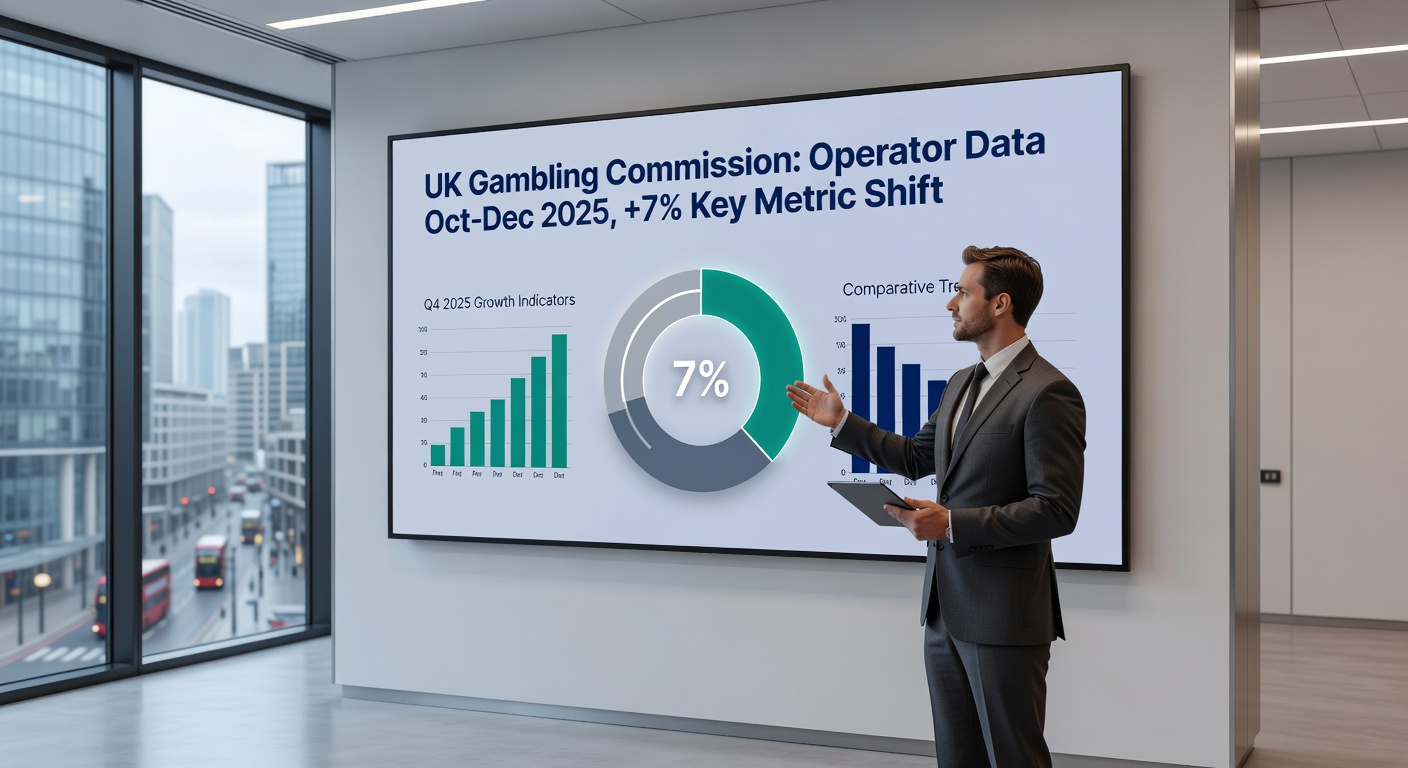
But here's the thing: the total licensed premises reached 8,254, encompassing everything from betting shops to arcades and casinos, while a whopping 190,965 machines operated within them, from fruit machines in pubs to larger setups in leisure spots; these numbers, steady and substantial, indicate that despite online shifts, physical gambling infrastructure supports thousands of jobs and local economies, particularly as sports seasons ramp up into 2026.
Take one observer who's followed these reports for years; they note how machine counts, hovering around that 190,000 mark, provide a reliable revenue stream through small-stake plays that add up across venues, even if GGY growth lags behind remote peers. Semicolons link these elements: land-based resilience persists, machines churn steadily, and shops draw crowds for live events.
Breaking Down the Broader Industry Picture
Overall GGY at £4.3 billion encompasses remote and non-remote alike, but sector-specific insights reveal nuances; for instance, while remote casinos led with £1.4 billion, non-remote betting's £592 million underscores football and horse racing's pull in physical spaces, where punters gather, chat odds, and cash slips amid cheering crowds.
Data from the February 2026 official statistics publication confirms this quarterly snapshot aligns with fiscal year trends starting April 2025, projecting toward March 2026 endpoints; researchers analyzing the XLSX downloads observe how GGY calculations—stakes minus prizes—highlight operator profitability amid rising player numbers.
Now, consider the machine ecosystem: 190,965 units across those 8,254 premises mean widespread access, from small coastal arcades to urban betting hubs, and while yields per machine vary, aggregate contributions bolster the £4.3 billion total. It's noteworthy that betting shops, at 5,782 strong, represent the largest slice of premises, tying directly to sports betting's cultural staple status in the UK.
Yet growth tells the real story; that 6.6% year-on-year jump, primarily remote-driven, comes as economic pressures ease post-2025, with disposable incomes freeing up for leisure spends like gambling. Observers point to seasonal factors too—summer football internationals and early horse meets likely boosted both online and shop bets.
Key Metrics and What They Reveal About Market Dynamics
- Total GGY: £4.3 billion, up 6.6% from Q2 2024;
- Remote casino GGY: £1.4 billion, leading the charge;
- Non-remote betting GGY: £592 million, steady amid shifts;
- Licensed premises: 8,254, including 5,782 betting shops;
- Machines in operation: 190,965, powering land-based play.
These bullets capture essentials, but flowing deeper, the data interconnects: remote growth pulls total GGY higher, land-based volumes via machines and shops provide baseline stability, and together they form a £4.3 billion powerhouse entering 2026's regulatory spotlight. Experts who've pored over past quarters see patterns—remote consistently outgrows, yet non-remote betting endures, especially where community ties run deep.
One study of similar reports found that machine-heavy venues contribute reliably quarter after quarter, while remote spikes tie to tech-savvy demographics; here, the 6.6% rise mirrors that, with online casinos exemplifying adaptability in a fast-changing world.
So as March 2026 approaches, with fiscal year-end looming, these Q2 figures set the stage for projections, hinting at continued momentum if trends hold.
Implications for Operators, Players, and Regulators
Operators celebrate the £4.3 billion haul, particularly remote successes at £1.4 billion, which validate digital pivots; land-based managers, overseeing 190,965 machines and 8,254 premises, draw reassurance from £592 million in betting GGY, knowing shops like the 5,782 counted remain viable hubs.
Players benefit from variety—online ease or shop buzz—while regulators, via the Gambling Commission, use such stats to fine-tune policies, balancing growth with protections as 2026 debates intensify. The reality is, this 6.6% uptick signals health, but watchers keep eyes on sustainability amid economic fluxes.
There's this case where prior quarters showed dips, yet Q2 rebounded strongly; patterns like that keep analysts busy, forecasting how remote leads into FY26's close.
Conclusion
The UK Gambling Commission's Q2 FY 2025/26 stats deliver a robust £4.3 billion GGY, propelled by remote casino's £1.4 billion and supported by non-remote betting's £592 million, across 8,254 premises with 190,965 machines including 5,782 shops; this 6.6% growth from 2024 underscores a thriving, evolving industry as it heads into March 2026. Data like this, straight from official tallies, equips everyone—operators plotting expansions, players choosing platforms, regulators shaping rules—with the facts needed to navigate ahead.