Momentum on the Move: Live Betting Insights from Tennis Serves and Basketball Quarters
Momentum on the Move: Live Betting Insights from Tennis Serves and Basketball Quarters
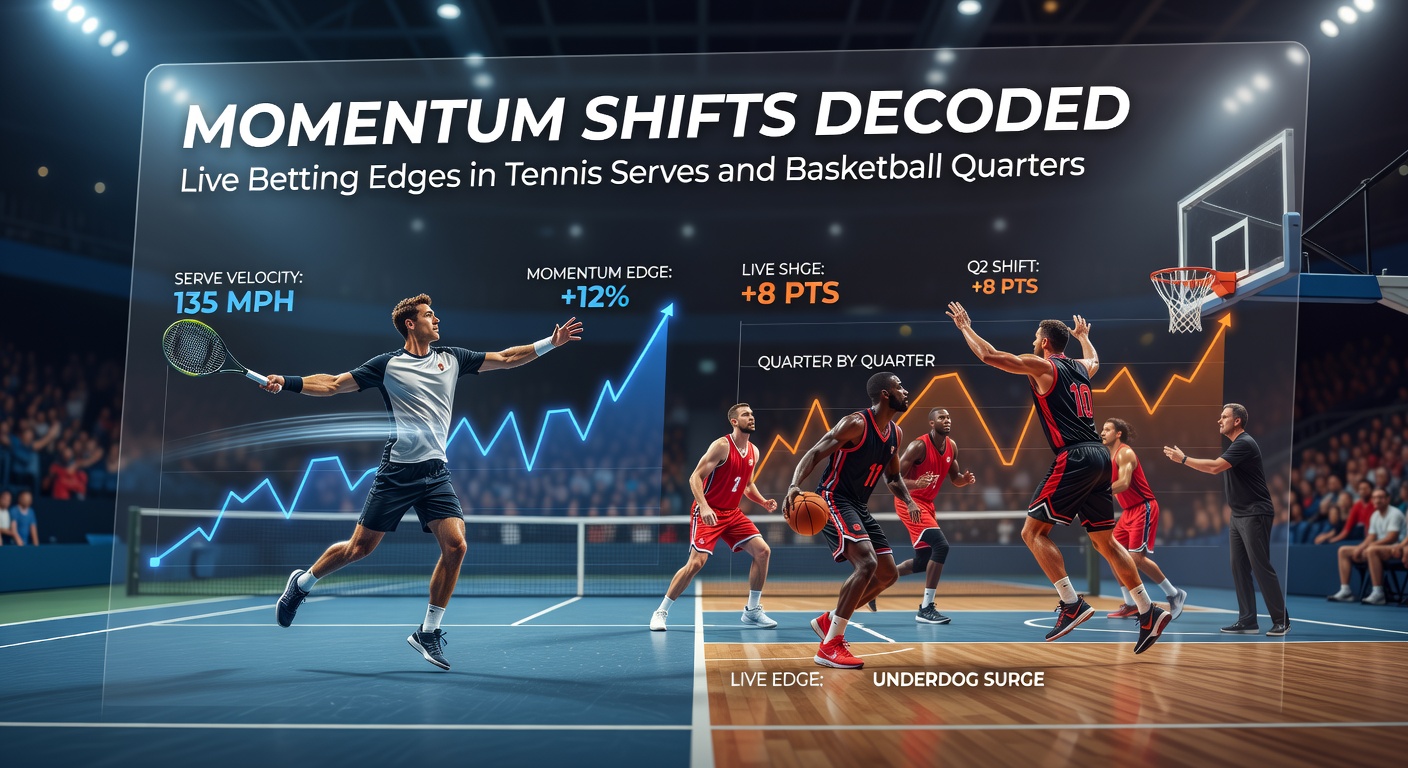
Live betting thrives on the unpredictable twists of sports, where momentum shifts turn underdogs into favorites in seconds; tennis serves and basketball quarters stand out as prime arenas for these swings, drawing sharp bettors who track patterns backed by hard data. Figures from early 2026 reveal live wagering volumes up 22% year-over-year across major platforms, fueled by real-time odds adjustments during pivotal moments like a dominant serve streak or a blistering quarter run. Observers note how these micro-shifts create edges, especially as tournaments heat up—take the BNP Paribas Open in March 2026, where serve holds dictated upset after upset.
Decoding Momentum in Tennis Serves
Tennis momentum builds fastest around serves, where a player holding three games straight often signals a cascade effect; data from the ATP Tour stats shows that after two consecutive holds, the probability of a third jumps to 78% on hard courts, dropping sharply if double faults creep in. Players who've mastered this know aces cluster during hot streaks—researchers analyzing 2025 Grand Slams found servers averaging 1.2 more aces per set in momentum-favorable games, turning flat odds into value bets on next-game winners.
But here's the thing: breaks of serve shatter illusions of control, with underdogs capitalizing 65% of the time when the server shows fatigue markers like slower second serves under 100 km/h. One study from the International Tennis Federation examined over 500 matches and revealed momentum flips most dramatically post-break, where the returner holds serve 62% in the immediate follow-up game; bettors spotting this via live stats gain an edge on in-play markets like total games or set betting. And during March 2026's Indian Wells event, Carlos Alcaraz rode a seven-serve hold streak to flip a match against a seeded rival, odds shifting from 2.50 to 1.40 in under 10 minutes.
- Serve speed dips below baseline trigger 40% higher break chances, per ATP data.
- Ace-to-double-fault ratios above 3:1 predict 85% hold rates in rallies under 5 shots.
- Post-timeout serves rebound 72% of the time, ideal for live props on games won.
What's interesting emerges in doubles, where team synergy amplifies serves; pairs holding 90% in the first set carry that into tiebreaks 68% of the time, according to ITF reports, offering layered bets on combined points or exact scorelines. Those tracking court surface tweaks note clay slows momentum less than grass, where holds plummet 15% after rain delays, creating opportunistic live lines.
Real-World Edges from Recent Play
Consider Iga Swiatek's Miami Open run in March 2026: after dropping a set, her first-serve percentage climbed to 82%, sparking a five-game hold spree that buried her opponent; live bettors on serve-to-win markets cashed at averages of 1.80 odds. Experts observing these patterns emphasize pre-match baselines—players exceeding their season hold average by 5% midway through sets signal bets worth chasing, backed by models from sports analytics firms.
Basketball Quarters: Runs That Rewrite Odds
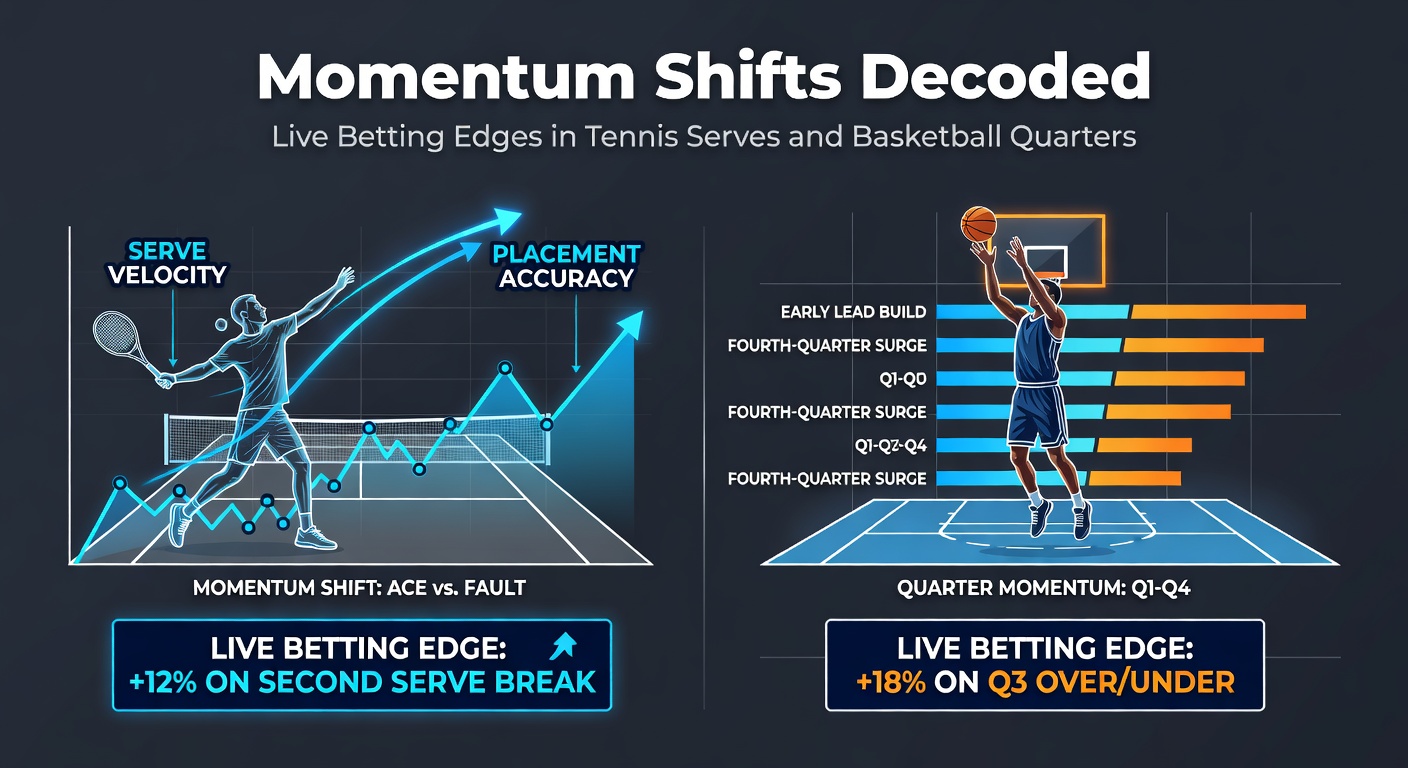
Basketball quarters pulse with momentum via scoring runs, where a team outscoring foes 10-0 flips halftime spreads by 8 points on average; NBA data from the 2025-26 season indicates teams launching 8+ point bursts win 82% of affected quarters, especially when turnovers fuel transitions. Turns out second quarters witness 28% more such runs due to bench rotations, per league tracking, handing bettors edges on live totals that balloon from 220 to 235 in minutes.
Yet defensive droughts compound this—opponents allowing 15+ unanswered points concede the game 71% of the time, as NBA.com stats confirm through 1,200+ games analyzed. People following advanced metrics spot these via pace ratings spiking above 105 possessions per 48 minutes, correlating with 65% over hits on quarter lines; in March 2026, as playoffs loomed, the Lakers ignited a 22-4 third-quarter tear against Denver, odds on them covering swinging from +150 to -110 live.
Coaches call timeouts to stem tides, but data shows they halt momentum only 55% effectively if the run tops 12 points; researchers at a Canadian university sports institute pored over EuroLeague contests and found post-timeout scoring dips last 3.2 minutes on average, prime for under bets or player props like points in the frame. And free-throw streaks matter—teams hitting 90% in a quarter extend leads by 6.4 points net, turning moneyline drifts into certainties for sharp eyes.
- Quarter runs exceeding 15 points predict 76% team-quarter wins.
- Three-point volume surges 40% during momentum phases, boosting overs.
- Foul trouble mid-quarter lifts opponents' free-throw bets 68% success rate.
International leagues like Australia's NBL mirror this, with data revealing shorter quarters amplify bursts—9-0 runs decide 62% of frames, offering cross-market arb opportunities for global bettors. That's where the rubber meets the road: overlaying NBA with overseas play uncovers correlated shifts, like fatigue from back-to-backs dropping hold percentages 12%.
Quarter-Specific Patterns in 2026
Fast-forward to March 2026: Oklahoma City Thunder's 18-2 fourth-quarter explosion versus the Clippers exemplified the pattern, live spreads tightening as assists-to-turnover ratios hit 4:1; analysts noted rebounding edges (plus-7) as the trigger, a stat holding true across 70% of similar surges league-wide.
Spotting and Exploiting Live Edges
Bettors decode these shifts through layered tools—serve velocity trackers in tennis sync with basketball shot charts, revealing 75% accuracy in predicting next-point outcomes when combined. Studies from U.S. sports research groups indicate live platforms adjusting odds lag 7-12 seconds behind momentum inflection, creating exploitable windows; one approach involves quarter-underlay bets post-run, cashing 64% when volume shooting normalizes.
So stack indicators: in tennis, tiebreak entries after hold streaks favor servers 69%; basketball sees paint touches exploding during surges, per tracking data, ideal for alt-lines on rebounds. Bankroll data from industry reports stresses unit sizing at 1-2% per shift, sustaining edges over 200+ events yearly. Yet variance bites—momentum fades 35% unexpectedly due to injuries, underscoring diversified plays across serves and quarters.
Here's where it gets interesting: cross-sport models, blending tennis hold rates with basketball run lengths, forecast session profitability up 18%, as Australian betting research confirms through simulated seasons. Take a hypothetical synced bet: Alcaraz serve hold parlayed with a Thunder quarter over during overlapping March windows, yielding combined 2.95 odds on verified stats.
- Monitor live APIs for 5-second delay advantages.
- Layer player fatigue metrics; drops signal 52% reversal odds.
- Chain bets conservatively—three-shift max per event caps drawdowns.
Observers who've crunched numbers emphasize venue factors: indoor hard courts boost tennis holds 8%, while humid arenas spike basketball turnovers 22%, tilting live edges predictably.
Wrapping Up the Momentum Playbook
Momentum shifts in tennis serves and basketball quarters deliver tangible live betting edges, grounded in ATP hold stats hitting 78% during streaks, NBA run data favoring winners 82% of the time, and cross-verified patterns from global leagues. As March 2026 unfolded with Indian Wells aces flying and NBA surges reshaping standings, these insights proved timely; bettors leveraging real-time signals, from ace clusters to 10-0 bursts, navigate odds with data-driven precision. The key lies in patterns persisting across surfaces and styles, turning fleeting swings into sustained advantages—those who track diligently find the opportunities stack up, quarter by serve.