
Mapping Inter-Sport Betting Dynamics: Combining Promotional Offers and Market Shifts in Tennis and Basketball Parlays
Analysts track value chains in sports betting by examining how promotional tools interact with live market movements across different competitions, and this approach applies directly to tennis and basketball accumulators where bettors combine selections from separate events. Observers note that free bet mechanics provide a structured way to enter positions without upfront capital outlay while odds drift reflects real-time adjustments driven by player performance, injury updates, and scoring runs. Data from industry reports indicate that these elements together form pathways for potential returns in multi-leg wagers that span both sports.
Free Bet Structures in Accumulator Contexts
Operators issue free bets as credits that match specific stake amounts or percentages, and these credits function within accumulator formats by covering one or more legs without altering the overall payout calculation on winning selections. Research from the Australian Gambling Research Centre shows participation patterns where users apply such credits to build larger multiples that include both tennis matches and basketball games played on the same day. Those who study these mechanics find that the credit often covers the initial stake on a high-odds leg, which leaves remaining capital available for additional selections while teh accumulator structure multiplies any returns across the chain.
Odds Drift Patterns in Tennis Events
Tennis markets exhibit drift during sets as serve percentages, break points, and fatigue indicators alter implied probabilities, and this movement occurs rapidly between points in best-of-three or best-of-five formats. Studies from university research groups in Canada reveal that drift tends to accelerate after the first set when one player establishes dominance, creating measurable shifts that bettors monitor through live feeds. In accumulator builds, a tennis leg with drifting odds can influence the perceived value of an entire parlay when combined with basketball selections scheduled later in the evening.
Basketball Quarter and Half Movements
Basketball odds adjust at each quarter break based on shooting efficiency, rebound differentials, and timeout strategies, while drift often peaks during the third quarter when teams implement adjusted defensive schemes. Figures from the National Council on Problem Gambling in the United States highlight volume spikes in live markets during these periods, particularly in leagues where teams play back-to-back games. When integrated into cross-sport multiples, these basketball drifts interact with tennis movements to produce layered value chains that require sequential monitoring rather than isolated analysis of each sport.
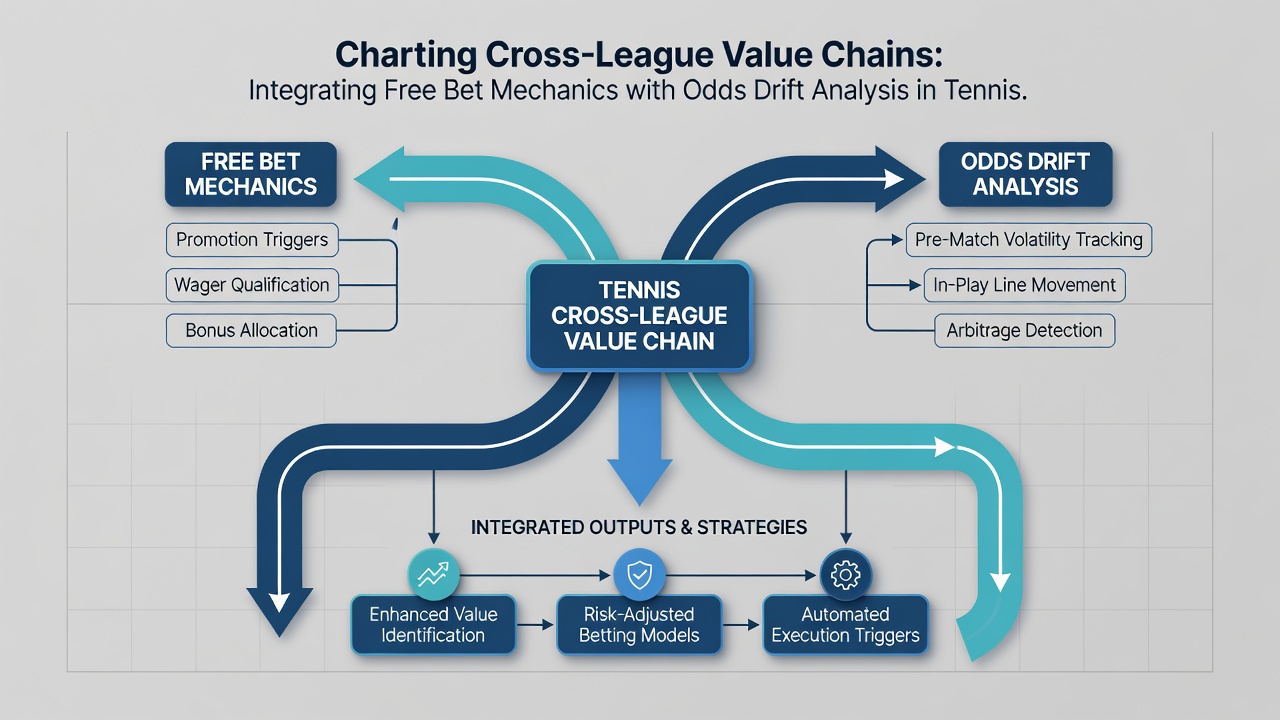
Linking the Two Through Value Chains
Value chains emerge when a free bet credit initiates one leg and subsequent drift in another sport either enhances or reduces the overall multiplier, and analysts map these connections by logging entry points alongside live price changes. In August 2026 observers documented instances where tennis drift on an outer-court match aligned with basketball run differentials in European leagues, allowing the accumulator to adjust mid-sequence. Industry organizations such as the European Gaming and Betting Association report that platforms now supply tools that display combined drift metrics across tennis and basketball, which supports systematic tracking without requiring separate applications for each sport.
Practical Integration Steps
Bettors begin by allocating the free bet to a tennis selection showing early drift potential, then monitor basketball quarters for complementary movements that either confirm or counter the initial direction. Data indicates that successful chains often pair a tennis underdog showing positive drift with a basketball total that moves in response to pace changes during the second half. Those who apply this method record entry times and price shifts to identify repeatable sequences rather than relying on single-event outcomes.
Conclusion
Cross-league value chains form through the measured use of free bet credits alongside continuous observation of odds movements in tennis and basketball multiples, and available evidence points to structured monitoring as the primary method for following these interactions. Reports from regulatory and research bodies continue to document participation trends in these combined formats, which underscores the ongoing relevance of drift analysis across both sports.