Managing Resource Distribution During Real-Time Changes in Horse Racing, Court Sports, and Field Events
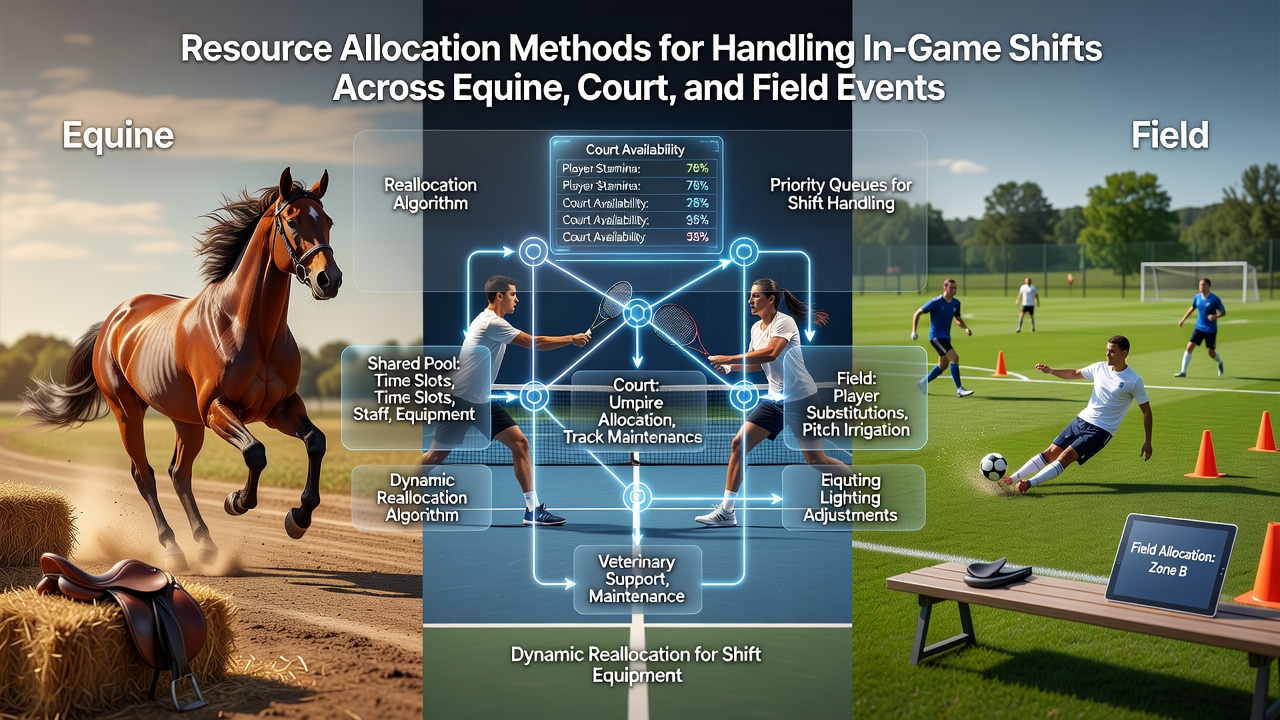
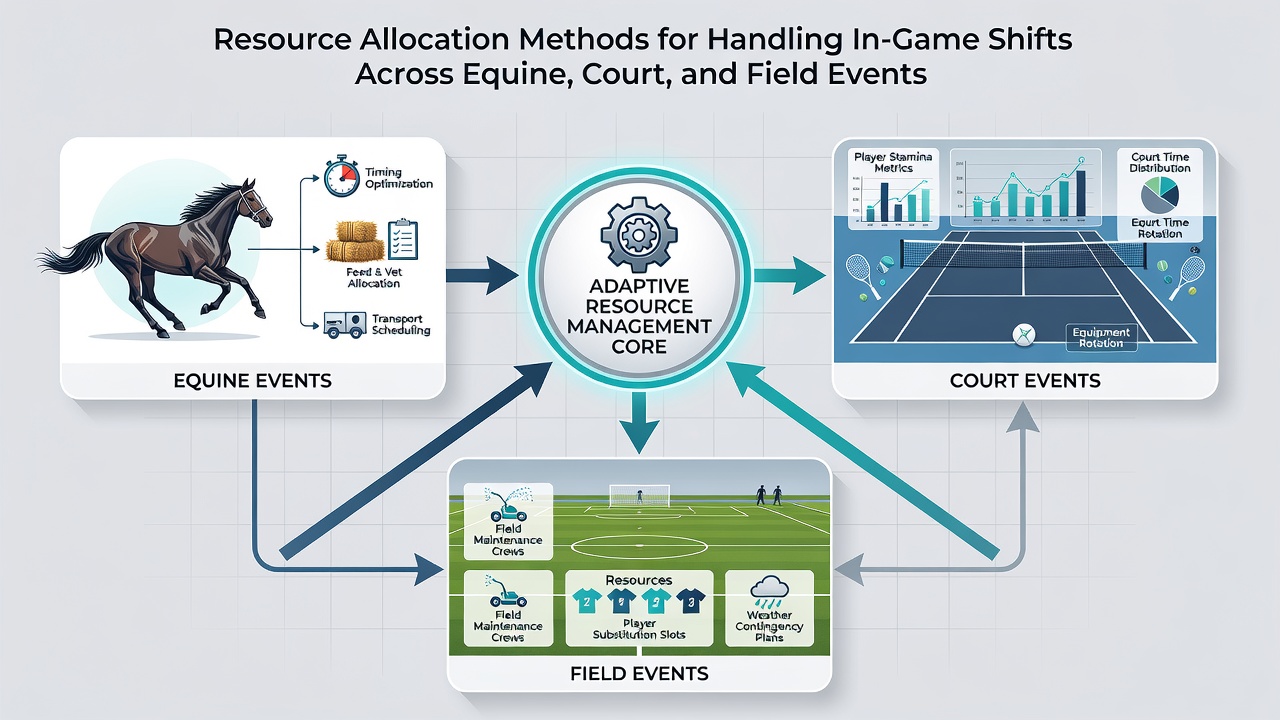
Resource allocation methods for handling in-game shifts have gained attention across equine, court, and field events because live conditions change rapidly and require precise adjustments to stakes and priorities. Data from industry reports shows that operators and participants track momentum swings, injury updates, and weather factors in real time while reallocating available resources to maintain balance. Researchers at the University of Nevada, Reno International Gaming Institute documented patterns where early allocation decisions influence later outcomes when events move into decisive phases.
Core Principles Behind Allocation Adjustments
Equine events demand allocation frameworks that respond to pace changes and late surges because horses alter positions within seconds during a race. Court sports introduce different variables since rallies and set breaks create discrete windows for reassessment, while field events feature continuous flow interrupted by substitutions and tactical resets. Those who study these patterns observe that successful methods combine pre-set thresholds with flexible overrides triggered by verified data feeds.
One approach involves dividing total resources into core and reserve portions at the outset, then moving portions from reserve only when specific triggers appear. Triggers include sudden odds movements exceeding preset margins or confirmed changes in participant status. This structure prevents overcommitment early while preserving capacity for later developments that studies indicate carry higher predictive value.
Application in Equine Racing Environments
In equine racing, allocation models focus on sectional timing data and jockey positioning because these elements shift quickly and affect final outcomes. Allocation teams monitor multiple races simultaneously and adjust exposure across runners when track conditions evolve or when a favorite drifts beyond expected ranges. Evidence from Australian wagering data reveals that reallocations timed just before the final turn correlate with improved return consistency across large sample sets.
Methods here often employ layered monitoring where primary resources stay fixed until the halfway point, after which secondary allocations activate based on real-time pace figures. Observers note that this staged release reduces exposure during uncertain early segments while capturing value when late information clarifies the competitive hierarchy.
Handling Shifts in Court-Based Competitions
Court competitions require allocation systems that account for serve dominance cycles and fatigue indicators because points accumulate in short bursts separated by changeovers. Allocation teams track point-win percentages per server and rebalance exposure when one competitor’s efficiency drops below established benchmarks. Canadian regulatory summaries from 2025 highlight increased use of automated alerts that flag these efficiency drops for immediate review.
Practical implementations split resources between match-long commitments and set-specific reserves. When a player wins an unexpected tiebreak or breaks serve repeatedly, portions move from the reserve pool to capitalize on the established edge. This method keeps overall exposure controlled while allowing targeted increases when statistical edges materialize within individual sets.
Adaptations for Field Event Dynamics
Field events present continuous play interrupted by restarts and personnel changes, so allocation methods emphasize cumulative metrics such as possession value and shot creation rates. Resources shift when these metrics cross predefined boundaries, often after substitutions or tactical adjustments become visible. European sports analytics groups have published findings showing that reallocations following the 60-minute mark produce measurable differences in long-term performance tracking.
Teams commonly maintain a baseline allocation across multiple concurrent fixtures and then concentrate resources on the fixture showing the clearest deviation from pre-match expectations. This concentration occurs only after cross-verification from multiple data sources to limit false triggers caused by temporary fluctuations.
Integration of Technology and Data Verification
Modern allocation systems incorporate live data streams from official timing providers and optical tracking platforms. Verification steps require confirmation from at least two independent sources before any reallocation executes. In July 2026 several major tournaments adopted enhanced verification protocols following earlier discrepancies in timing feeds that affected allocation accuracy.
Software platforms now allow predefined rulesets that execute automatically once conditions match stored criteria. Human oversight remains in place for edge cases where data conflicts appear or when external factors such as venue announcements alter expected conditions. This hybrid model balances speed with accuracy according to reports from multiple sports technology providers.
Conclusion
Resource allocation methods for equine, court, and field events continue to evolve as data availability and verification tools improve. Structured approaches that separate baseline commitments from responsive reserves provide frameworks capable of handling the distinct shift patterns each sport presents. Ongoing documentation from academic and industry sources indicates these methods achieve greater consistency when triggers receive multi-source confirmation and when adjustments remain proportional to verified changes rather than momentary fluctuations.