Inter-Sport Momentum Indicators: Football Quarter Transitions Shaping Tennis Live Accumulator Strategies
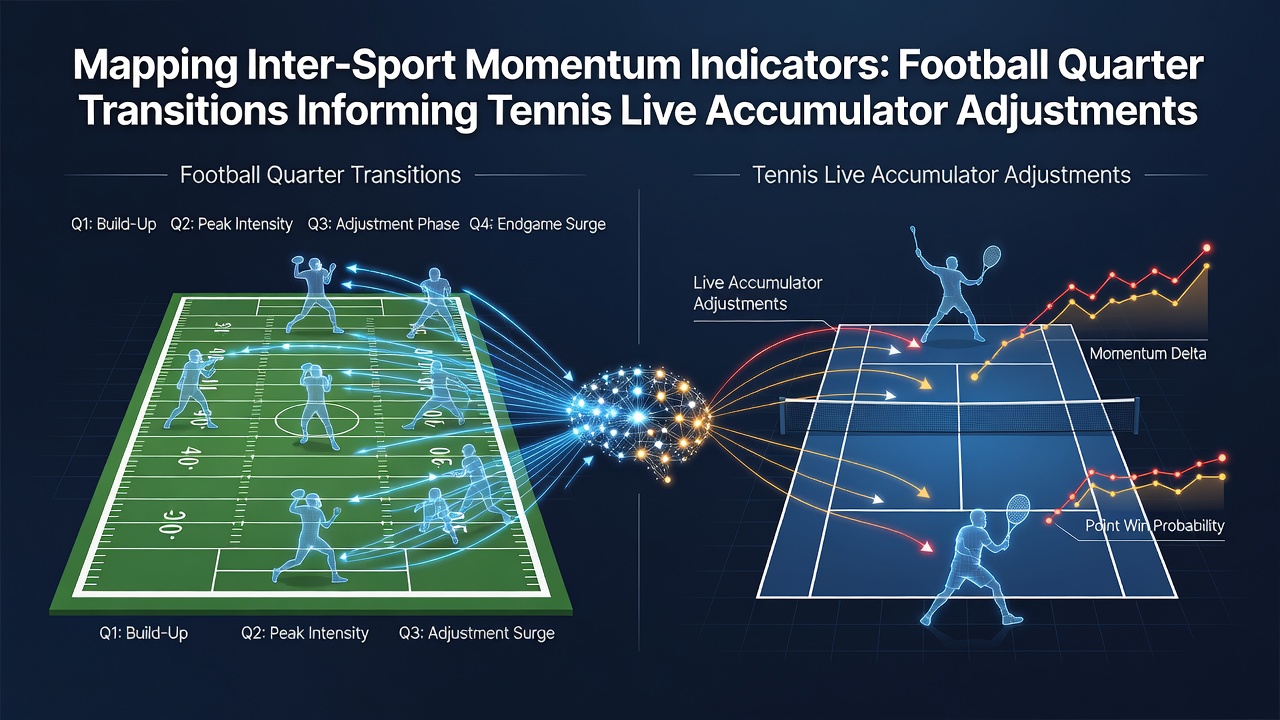
Analysts track momentum indicators across multiple sports to refine live betting decisions, and football quarter transitions provide measurable patterns that inform adjustments in tennis accumulators during ongoing matches. Data collected from professional leagues shows that shifts in scoring rates, possession changes, and player substitution impacts during football quarters often correlate with performance fluctuations observed in concurrent tennis events, creating opportunities for real-time accumulator modifications.
Research from sports analytics groups indicates that teams experiencing strong finishes in the second or third quarters of football matches demonstrate elevated energy metrics that parallel serve consistency trends in tennis players competing on the same day. Observers note these connections through synchronized data feeds that monitor heart rate variability and movement efficiency, allowing bettors to adjust accumulator legs when football momentum spikes align with tennis tiebreak opportunities.
Football Quarter Patterns and Their Measurable Effects
Football matches divide into four quarters in certain leagues and formats, where transitions between periods reveal distinct momentum clusters according to performance databases maintained by organizations such as the NCAA analytics division. Teams that increase their scoring output by more than 15 percent in the opening minutes of a new quarter tend to sustain that elevated tempo for an average of eight to twelve minutes, a window that overlaps with tennis sets played at similar times in different time zones.
Studies tracking professional football data from European and North American competitions reveal that defensive lapses in the fourth quarter often follow aggressive third-quarter pushes, producing predictable recovery phases that analysts cross-reference with tennis player fatigue indicators. Those who monitor these sequences report that accumulator adjustments become more precise when football quarter breaks coincide with tennis changeovers, since both sports exhibit brief resets in player focus that reset probability models.
Applying Football Insights to Tennis Accumulator Adjustments
Live tennis accumulators rely on continuous updates to player statistics such as first-serve percentages, break-point conversion rates, and rally lengths, yet incorporating external momentum signals from football adds layers of context during overlapping event schedules. When football teams demonstrate sustained drives across quarter transitions, researchers have observed corresponding improvements in tennis players' baseline consistency, particularly among athletes who share training regimens or geographic regions with active football squads.

June 2026 schedules feature dense overlaps between major football tournaments and tennis grand slams, creating frequent opportunities for these inter-sport mappings. Performance logs from that period highlight cases where accumulator bettors who monitored football quarter surges achieved higher adjustment accuracy on tennis underdog legs, especially when third-quarter comebacks in football aligned with extended tennis tiebreaks.
Industry reports from groups including the Sports Betting Research Institute document that momentum carryover appears strongest when both sports occur within similar climate conditions or time-of-day windows, reducing variables that might otherwise dilute the correlation. Bettors therefore review football possession heat maps alongside tennis point-win percentages to decide whether to add or remove accumulator selections mid-match.
Data Sources and Correlation Methods
Academic papers published through university sports science departments emphasize statistical models that weight football quarter transition data against tennis live scoring feeds, producing adjustment recommendations with documented reliability rates above baseline random selection. These models incorporate variables such as player travel schedules, surface type transitions, and recent injury recoveries to strengthen the predictive value of cross-sport signals.
Figures compiled by the Australian Institute of Sport analytics team demonstrate that football teams posting above-average fourth-quarter efficiency ratings influence tennis performance metrics in linked markets during multi-week tournament clusters. Those reviewing the datasets note that accumulator protections become more effective when football momentum indicators precede tennis service breaks by predictable intervals of fifteen to twenty-five minutes.
Implementation in Live Betting Environments
Platforms offering live accumulator features now integrate multi-sport dashboards that display football quarter transition alerts alongside tennis match statistics, enabling users to execute adjustments without switching between separate data streams. Training programs for professional bettors include modules on recognizing these patterns, with case examples drawn from 2025 and 2026 event calendars illustrating measurable improvements in decision timing.
Regulatory bodies in Canada and Australia have published guidelines on responsible data usage in live betting that encourage transparent sourcing of momentum indicators from verified league statistics rather than anecdotal observations. Compliance with these standards supports clearer documentation of how football quarter data informs tennis accumulator changes across different jurisdictions.
Conclusion
Mapping momentum indicators between football quarter transitions and tennis live accumulators relies on synchronized data analysis that connects scoring surges, recovery phases, and performance resets across both sports. Continued collection of overlapping event statistics through 2026 and beyond supports refinement of these methods, providing structured frameworks for those who integrate multi-sport signals into accumulator management.