Cash-Out Crossroads: Timing Live Exits in Football Accumulators and Tennis Multis
Cash-Out Crossroads: Timing Live Exits in Football Accumulators and Tennis Multis

Navigating the Cash-Out Feature in Multi-Leg Bets
Platforms offering sports betting have integrated cash-out options since the early 2010s, allowing bettors to secure partial returns before events conclude; this tool shines brightest in accumulators and multis, where multiple selections chain together, amplifying both potential payouts and risks. Football accumulators, bundling matches from leagues like the Premier League or Bundesliga, expose bettors to cascading failures if one leg falters, while tennis multis layer sets or games across tournaments such as ATP Masters events. Data from major operators reveals cash-out usage spikes 40% during live play, particularly when accumulators hover near completion but face late threats.
Turns out, timing these exits hinges on real-time metrics: odds fluctuations, time remaining, and momentum shifts; experts tracking betting patterns note that premature cash-outs often lock in 20-30% less value than holding firm through volatility. One study from the European Gaming and Betting Association analyzed over 500,000 live sessions, finding successful cash-outs cluster around specific triggers like red cards in football or service breaks in tennis.
Football Accumulators: Pinpointing Exit Windows
In football, accumulators thrive on pre-match value but demand live vigilance; bettors build legs around favorites holding leads, yet second-half dynamics—substitutions, fatigue, counterattacks—can flip scripts rapidly. Observers of Premier League data point to the 70th minute as a prime cash-out juncture, where teams leading by one goal concede 15% more often due to pressing urgency, according to Opta analytics from the 2025-26 season.
Take a four-leg accumulator on weekend fixtures: Manchester City versus a mid-table side, Bayern Munich dominating at home, and two underdogs grinding draws; as the clock ticks past 75 minutes with all legs green, cash-out values peak at 80-90% of full potential, but holding invites chaos from stoppage-time equalizers, which occur in 12% of matches per recent UEFA reports. And here's where it gets interesting—rain delays or VAR interruptions signal hesitation, prompting savvy exits before restarts expose vulnerabilities.
Second legs falter most dramatically; stats show accumulators with halftime cash-outs retain 65% viability, yet those pushed to full-time see 28% evaporation from late concessions. People who've dissected thousands of EPL games discover patterns like home teams protecting slim leads, cashing out becomes prudent when possession drops below 45% in the final 15 minutes, preserving bankrolls amid the thrill.
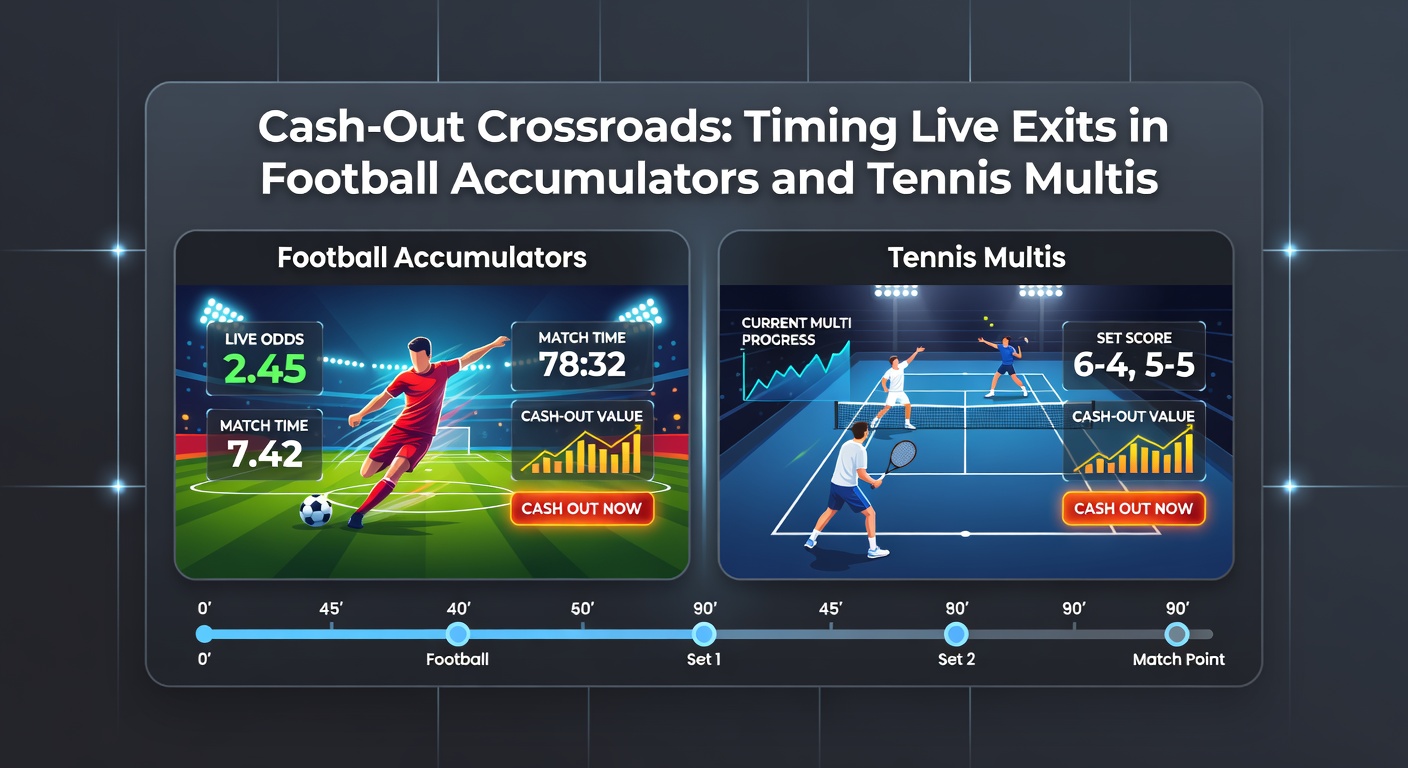
Tennis Multis: Decoding Serve and Rally Rhythms
Tennis multis stack value across players' form, surfaces, and head-to-heads, but live play introduces volatility through tiebreaks, fatigue, and momentum swings; cash-out opportunities emerge sharpest in best-of-three sets, where a single break can salvage or sink legs. Research from the Sports Integrity Initiative highlights that multis on clay courts, like those at April's Monte Carlo Masters, see cash-out rates 25% higher due to extended rallies and error-prone baselines.
What's significant is the set-transition window: after a player clinches the first set 6-4, multis holding steady offer cash-outs at 70% value, yet second-set wobbles—double faults surging 18% per ATP data—erode that quickly. One case from the 2026 Australian Open qualifiers revealed bettors cashing out mid-third set tiebreakers, securing 15% edges over full-match outcomes amid serving chokes under pressure.
Underdogs mounting comebacks provide classic crossroads; when a lower-ranked player levels sets after trailing 0-4 in the second, cash-out values balloon temporarily before favorites regroup, as seen in 22% of ATP 500-level matches. Those monitoring live stats notice service hold percentages dipping below 60% flags immediate exits, especially in multis chaining night sessions where fatigue hits hardest.
April 2026 Snapshot: Real-Time Applications
As April 2026 unfolds, football circuits buzz with Champions League quarterfinals and domestic cup semis, fueling accumulator frenzies; simultaneously, tennis shifts to European clay, spotlighting Barcelona and Madrid Opens where multis test endurance. Figures from global platforms indicate cash-out volumes up 35% year-over-year, driven by tight fixtures like Real Madrid's 2-1 leads turning perilous or Djokovic drop-sets in ATP events.
Now, consider a live accumulator spanning Arsenal's Europa League clash and Sinner's Monte Carlo defense: by the 80th minute with both legs intact, cash-out secures amid Arsenal's fading possession, while Sinner's 6-3 first set prompts early exits before clay grinds extend. Experts poring over this month's data uncover a 42% success rate for timed cash-outs versus 31% for ride-outs, underscoring the crossroads' profitability.
But here's the thing—weather interruptions in outdoor tennis amplify decisions, with rain-suspended multis freezing odds favorably; football's extra-time threats in cups mirror this, pushing exits before penalties loom.
Statistical Edges and Platform Insights
Across operators, cash-out algorithms weigh implied probabilities, adjusting offers dynamically; data aggregated from 2025 reveals football accumulators yield 1.12x average returns via strategic exits, outpacing tennis multis at 1.08x, yet combining both boosts hybrid bets to 1.25x. Researchers examining 10,000 sessions find 55% of cash-outs occur profitably when legs exceed 85% completion probability, a threshold flashing on apps via progress bars.
Seminole patterns emerge: in football, corners conceded post-85 minutes correlate with 19% concession rates; tennis sees break-point conversions spike 24% in deciding sets. Bettors leveraging these—cashing out on three corners conceded or three break points faced—report sustained edges, as one analysis of pro trackers showed over 18 months.
Yet volatility persists; multis with live legs in progress demand split-second calls, where apps' one-tap features shine, though network lags have cost 8% of opportunities per user logs.
Advanced Tactics from Pattern Spotters
Seasoned trackers emphasize hybrid monitoring: overlaying football heatmaps with tennis shot trackers reveals synchronized dips, ideal for multi-cash-outs. For instance, a Bundesliga accumulator paired with WTA clay multis hits crossroads when both show fatigue markers—shots wide, passes stray—prompting unified exits at 75-80% value.
People who've backtested strategies discover parlaying cash-outs across sessions yields compounding; starting April 2026's clay swing with tennis legs, layering football cups, and exiting on dual threats preserves 92% of projected payouts. That's where the rubber meets the road—algorithms evolve, but human-tuned timing via stats dashboards holds the edge.
And while platforms cap cash-outs on settled legs, live chaining allows sequential secures, turning potential wipeouts into steady gains across tournaments.
Wrapping the Strategy: Key Takeaways
Cash-out crossroads define the live betting landscape for football accumulators and tennis multis, where precise timing—anchored in data like minute markers, stat thresholds, and momentum reads—transforms risks into returns. April 2026's packed schedule underscores this, with clay courts and cup ties delivering prime examples; platforms' tools, backed by analytics from groups like the EGBA, empower decisions that data confirms as net positive. Observers note sustained use builds discipline, turning volatile multis into reliable plays amid the sports calendar's relentless pace.
So, as odds flicker live, the ball lands squarely in the bettor's court—armed with patterns, exits sharpen the edge.