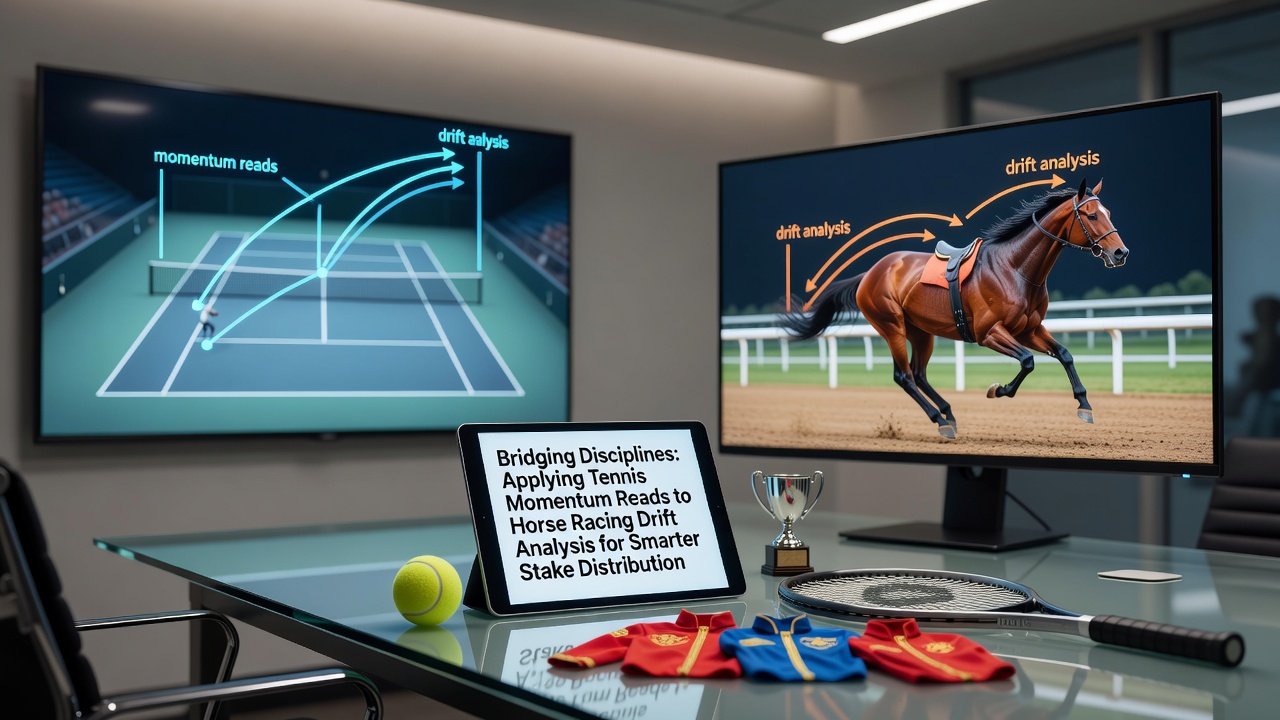
Bridging Disciplines: Applying Tennis Momentum Reads to Horse Racing Drift Analysis for Smarter Stake Distribution
Analysts in sports betting have long tracked how momentum builds and shifts during tennis matches, and those same pattern recognition techniques now find application in horse racing where late odds drifts signal changing market conditions. Observers note that both domains reward participants who read subtle changes in real time rather than relying on pre-event form alone. Data from August 2026 shows continued growth in cross-sport betting strategies across European and North American markets, with platforms reporting increased use of momentum-based staking models.
Tennis Momentum Patterns and Their Core Indicators
Researchers studying professional tennis have documented how serve percentages, break-point conversion rates, and point-win streaks create measurable momentum phases that influence live odds. A player who converts 70 percent of break points over three consecutive games often sees betting volume surge toward their next service game, according to aggregated exchange data. These shifts occur quickly, sometimes within a single set, and experienced bettors adjust stakes upward or downward based on the direction and velocity of the movement rather than the absolute score.
Studies from sports analytics programs at universities in Australia and Canada demonstrate that momentum clusters tend to last between four and seven games before regression sets in. Bettors who wait for confirmation of sustained momentum rather than reacting to isolated points achieve more consistent results over large sample sizes. The same principle applies when a favorite loses serve early yet maintains high first-serve percentages; the market may overreact with inflated prices on the underdog, creating opportunities for contrarian stake distribution.
Horse Racing Drift Mechanics and Market Signals
In horse racing, odds drifts occur when available prices lengthen in the minutes before a race, often reflecting late information, reduced confidence from professional syndicates, or simply a lack of new money supporting the runner. Exchange operators record these movements in real time, and the speed of a drift frequently correlates with the reliability of the underlying signal. Slow, steady drifts over twenty minutes tend to indicate informed money exiting, whereas sharp, sudden lengthening can stem from non-betting factors such as ground condition updates.
Figures released by the Australian Racing Board in mid-2026 highlighted that races with drifts exceeding 25 percent from opening show prices produced different strike rates than those with minimal movement. Trainers and owners sometimes withhold support until they receive final track reports, and these patterns repeat across both flat and jumps meetings. Bettors who treat drift velocity as a proxy for information quality can refine stake sizes accordingly, increasing exposure when the drift stabilizes and reducing it when movement continues without pause.
Transferring Momentum Reads Across Disciplines
Those who have examined both sports identify direct parallels between a tennis player losing serve and a horse drifting in the betting. In each case the initial movement prompts a reassessment of true probability. Analysts apply the same visual and statistical filters: duration of the shift, volume supporting the new price, and historical tendency of similar situations to reverse or continue. A horse that drifts from 5-2 to 4-1 over eight minutes while trading volume remains low mirrors a tennis favorite who drops a service game yet holds above 65 percent first-serve points; both situations invite measured stake increases rather than wholesale position reversal.

Stake distribution models built on these observations typically employ tiered sizing. Initial stakes remain modest until momentum or drift confirmation appears, after which allocations scale according to the strength and persistence of the signal. Research published in the Journal of Gambling Studies indicates that such graduated approaches reduce drawdown periods compared with fixed-percentage staking across mixed portfolios of tennis and racing bets.
Practical Implementation in August 2026 Markets
During August 2026, several international betting exchanges introduced enhanced drift-tracking tools that display velocity alongside price history. These features allow users to overlay tennis-style momentum indicators onto racing markets, highlighting periods where drift acceleration matches thresholds previously validated in live tennis data. Participants who combine these tools with volume filters report more precise entry points, particularly in handicaps where multiple runners experience simultaneous but differing drift rates.
Academic work from the University of Nevada, Las Vegas Center for Gaming Research supports the view that cross-domain pattern recognition improves calibration when sample sizes reach several thousand events. The study examined three seasons of combined tennis and thoroughbred data and found that models incorporating both momentum duration and drift velocity produced lower variance in returns than single-sport approaches.
Conclusion
Integration of tennis momentum analysis with horse racing drift interpretation offers a structured method for adjusting stake distribution based on observable market behavior. Continued development of real-time analytics tools across global platforms supports wider adoption of these techniques. As data sets grow through the remainder of 2026, further refinement of threshold values and scaling rules remains likely, driven by ongoing collaboration between quantitative analysts and domain specialists in both sports.