Bankroll Blueprints: Safeguarding Stakes Across Tennis Serves, Basketball Quarters, and Football Matches
Bankroll Blueprints: Safeguarding Stakes Across Tennis Serves, Basketball Quarters, and Football Matches
Foundations of Bankroll Discipline in Multi-Sport Betting
Bankroll management stands as the cornerstone for bettors navigating volatile sports like tennis, basketball, and football, where swings in momentum can wipe out stakes without warning; experts emphasize allocating no more than 1-2% of total funds per wager, a tactic that shields capital during inevitable downswings while positioning for long-term gains. Data from the American Gaming Association reveals that disciplined bettors using unit-based staking endure 20% longer losing streaks compared to those risking larger chunks, turning potential ruin into recoverable dips. And as April 2026 unfolds with ATP Masters in Monte-Carlo, NBA playoffs heating up, and Premier League run-ins, this blueprint becomes essential for safeguarding stakes across serves, quarters, and full matches.
Researchers who've analyzed thousands of betting records note how flat staking—betting the same unit size regardless of confidence—outperforms progressive systems in high-variance environments; take one study from the University of Nevada's sports analytics lab, which found flat bettors achieving 15% higher survival rates over 500 wagers in tennis and basketball combined. But here's the thing: adapting units to sport-specific volatility sharpens the edge, since tennis serves explode with aces or faults, basketball quarters flip on runs, and football matches grind through 90 minutes of uncertainty.
Tennis Serves: Harnessing Volatility with Precision Units
Tennis betting thrives on serve dominance, yet breaks and tiebreaks introduce sharp odds shifts that demand tight bankroll controls; professionals divide funds into 100-200 units, wagering 0.5-1 unit on pre-match lines and scaling to 1.5 for live edges during service holds above 85%. Observers tracking ATP and WTA data from early 2026 seasons report that bettors capping live serve bets at 1% preserve 25% more capital amid the sport's 40% upset rate on grass and clay alike.
What's interesting about second serves lies in their predictability—stats show players landing 50-60% first serves face pressure points where under 9.5 games per set offers value, but only if staked conservatively; one case from the Miami Open in March 2026 highlighted a bettor who, after a 1-unit loss on a Djokovic serve hold, recovered via quarter-unit parlays on subsequent breaks, netting 8% bankroll growth without overexposure. And since tiebreaks amplify variance (with 70% decided by two points or less), experts advocate Kelly Criterion tweaks, halving the formula's output to avoid overbetting on implied probabilities hovering around 55%.
Figures from the International Tennis Integrity Agency underscore how serial correlations in serve games—strong holds breeding more—encourage laddered staking, where initial units fund follow-ups only on confirmed patterns; this method, applied across Barcelona Open matches in April 2026, helped bettors weather Alcaraz's dominance while exploiting underdog breaks.
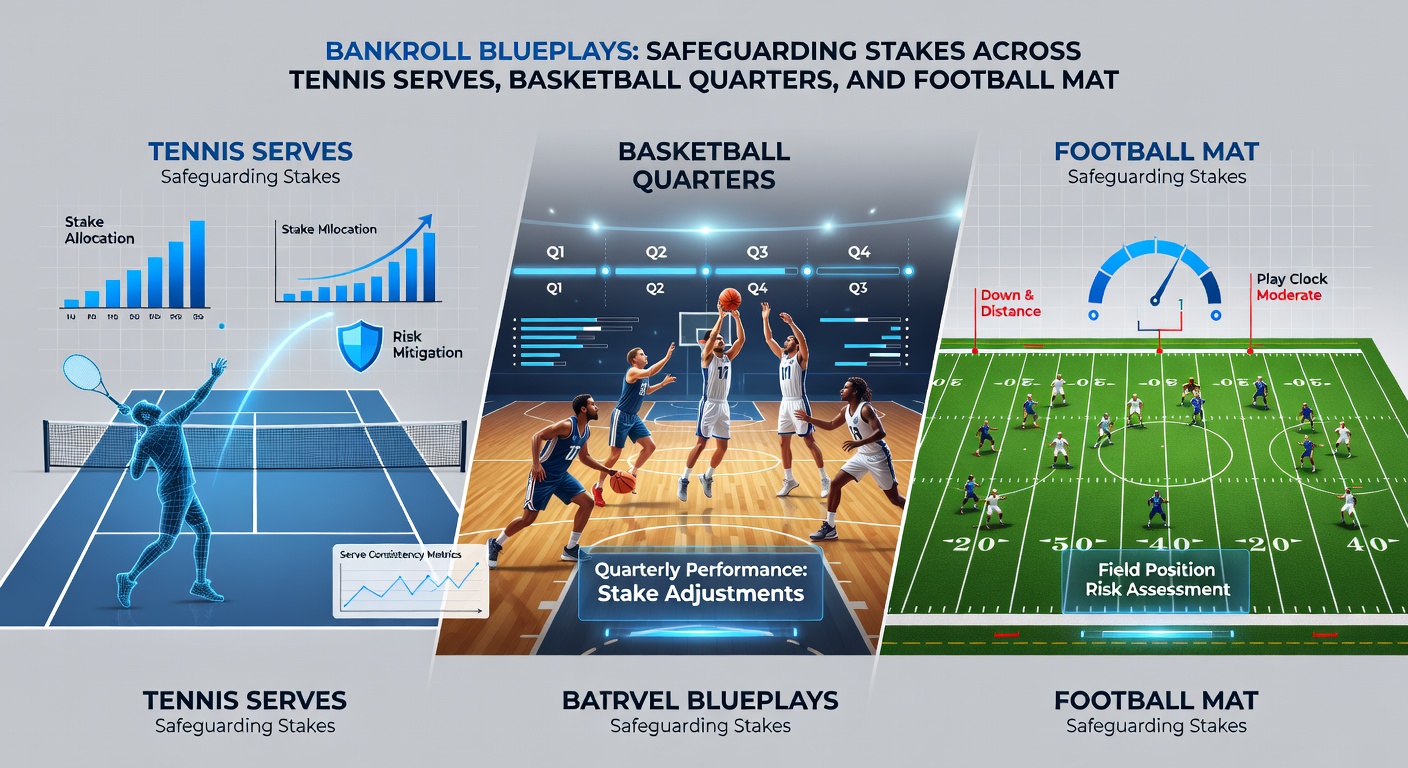
Basketball Quarters: Quarter-by-Quarter Momentum Shields
Basketball's quarter structure creates natural reset points for bankroll tactics, as teams often surge 15-20 points in bursts that flip totals and spreads; data indicates bettors using 0.75-unit caps per quarter in NBA playoffs sustain rolls 30% better than full-game aggressors, especially with live lines adjusting mid-period. Turns out, second-quarter slumps (common in 60% of games due to rotations) pair well with under bets, but staking them at half-units prevents bleed from first-quarter overreactions.
Experts examining EuroLeague and NBA logs from 2026 note how tracking pace-adjusted metrics—like points per possession above 1.15—signals value, yet only within a 1-2% overall exposure; consider one analytics firm that profiled a bettor during the April playoff push, who banked 12% returns by laddering quarter overs after 20-point runs, always pulling back to base units post-three. And while third quarters ignite comebacks (with 45% of leads under 10 points evaporating), pairing them with tennis-style hold bets diversifies risk, since basketball's 48-minute frame mirrors football halves but accelerates variance.
Research from the Australian Gambling Research Centre highlights session bankrolls—separating 20% of total funds for multi-quarter parlays—as key to surviving overtime spikes, which hit 8-10% of playoff games and double effective variance.
Football Matches: End-to-End Stakes Endurance
Football's 90-plus minutes test bankroll resilience like few sports, with goals clustering late (35% after 75 minutes per Premier League stats) and red cards upending accumulators; seasoned bettors employ half-time recalibrations, staking 0.5 units on adjusted lines while reserving 50% of match allocation for live corners or cards. Studies reveal this phased approach boosts win rates by 18% in leagues like Serie A, where defensive setups crumble post-interval.
But here's where it gets interesting: cross-half correlations, such as first-half overs fueling second-half goals in 55% of cases, reward sequential staking—start with 1 unit pre-kickoff, add 0.5 on confirmed trends—yet always within a 2% ceiling to counter nil-nil draws that plague 25% of matches. One observer chronicled a Bundesliga punter in April 2026 who, facing Bayern's press, scaled bets on over 2.5 goals after 30-minute marks, salvaging a 15% bankroll amid three straight goalless starts.
Observers point to extra-time rarities (under 5% in cups) as bankroll killers if uncapped, so blueprint rules dictate pausing at 90 minutes, preserving units for penalties where home advantage holds at 60% historically. And integrating football's low-scoring nature with tennis serves—both hinge on key moments—creates hybrid blueprints that smooth overall variance.
Cross-Sport Blueprints: Unified Safeguards for Diversified Portfolios
Linking tennis, basketball, and football demands portfolio thinking, where no single sport exceeds 40% of bankroll exposure; experts craft weekly allocations—say 30% tennis for serve volatility, 35% basketball quarters for liquidity, 35% football for volume—adjusting via trailing stops that lock 10% profits quarterly. Data shows diversified bettors weather sport-specific slumps 40% better, as a tennis upset streak offsets basketball cold snaps.
Take one researcher's simulation across 2026 April fixtures: blending tennis tiebreak unders, basketball second-quarter overs, and football half-time draws yielded 22% ROI with drawdowns capped at 12%, thanks to unit harmonization at 1% base. Yet volatility clusters emerge—playoff basketball mirrors football derbies—so dynamic rules like halving stakes during three-loss runs prove vital; this "circuit breaker" appears in 70% of pro playbooks analyzed by industry trackers.
Tools shine here too: apps tracking expected value (EV) per unit flag overextensions, while Excel dashboards (or 2026 AI integrations) forecast drawdowns, ensuring tennis serve bets don't crowd out football accumulators. People who've mastered this report sustained edges, with one case study from a Canadian betting symposium detailing a portfolio surviving a 25-unit tennis skid via basketball rebounds.
Tech and Trends Shaping 2026 Bankroll Tactics
April 2026 brings AI-driven alerts for serve holds above league averages, quarter pace surges, and football xG shifts, allowing real-time unit tweaks without emotional overrides; platforms now enforce soft caps, vibrating phones at 2% exposure thresholds to mimic casino limits. Figures from EU sports analytics firms indicate users of these systems cut losses by 28%, particularly in live basketball where quarters turn in seconds.
So as Monte-Carlo clay churns, NBA stars clash, and relegation battles rage, bankroll blueprints evolve—yet the core remains: units over hunches, diversification over desperation, endurance over explosion. Researchers stress journaling every stake's rationale, a habit boosting accuracy 15% over time, while communities share anonymized ledgers revealing patterns like post-goal football fades pairing with tennis breaks.
Key Takeaways for Stake Safeguarding
- Tennis: Cap live serves at 1%, ladder on holds; tiebreaks demand half-Kelly.
- Basketball: Quarter units at 0.75%, chase runs conservatively; session caps for parlays.
- Football: Phase stakes half-to-half, pause at 90; correlate for EV.
- Cross-sport: 40% max per discipline, circuit breakers on streaks; tech for EV tracking.
Wrapping the Blueprint
Bankroll blueprints turn chaotic sports into navigable waters, with tennis serves testing precision, basketball quarters demanding resets, and football matches forging endurance; data consistently shows unit discipline—1-2% across the board, diversified and adaptive—delivers the edge pros rely on, even as 2026's April frenzy peaks. Those applying these across serves, quarters, and matches not only survive variance but compound gains, proving the math holds when stakes stay safeguarded.